What You Do in the First Few Weeks Can Make a Huge Difference
A lumbar disc herniation can feel like a bolt of pain stopping you in your tracks—whether it’s sharp discomfort in your lower back or radiating pain down your leg. In the acute phase, movement may seem like the last thing you want to do, but the right gentle exercises can help control pain, improve mobility, and kickstart your healing process.
At Healthy Movements Physiotherapy, we understand that rest alone won’t solve the problem. In fact, avoiding movement for too long can slow down your recovery! This guide will walk you through safe, effective exercises that promote circulation, reduce muscle spasms, and engage your core without aggravating your symptoms.
Let’s dive into what causes a lumbar disc herniation, how to manage it in the acute phase, and the key exercises to help you heal.
Daily Exercises for Lumbar Disc Herniation in the Acute Phase
Lumbar disc herniation is a common spinal injury that can cause significant pain and discomfort. The right exercises, guided by a physiotherapist, can help manage symptoms, improve mobility, and support recovery. During the acute phase, the focus is on gentle movements that promote circulation, reduce muscle tension, and activate core muscles without worsening symptoms. Let’s start with a quick review of the key things you need to know about disc herniations.
What Causes Lumbar Disc Herniation?
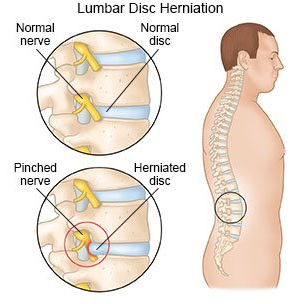
Factors that contribute to the development of a herniated disc include decreased water retention in the nucleus, an increase in type I collagen content in the nucleus, collagen degradation, axial overloading, and genetics, which are some of the key factors
- Aging & Degeneration: Over time, spinal discs lose hydration and flexibility, making them more prone to injury.
- Mechanical load and pressure applied to the lumbar spine: Herniated discs are most common in jobs that involve carrying or suddenly lifting heavy loads and jobs like truck drivers, Trades people, and similar professions.
- Most common is repetitive Lifting and/or bending.
- Prolonged sitting with spine in flexion.
- Increased body weight: It is believed to be a consequence of increased axial loading of the lumbar spine
- Genetics & Lifestyle Factors: Some people may be more predisposed to disc issues due to family history, obesity, or lack of physical activity.
Can You Heal from a Lumbar Disc Herniation?
Yes! Many people recover with conservative treatments like physiotherapy, exercise, and lifestyle modifications. While a herniated disc does not “grow back,” the symptoms often improve as inflammation decreases and the body adapts. Surgery is rarely needed unless there is severe nerve compression or persistent pain that does not improve with treatment.
Signs You May Have a Lumbar Disc Herniation

- Lower back pain that may worsen with movement
- Pain radiating down one or both legs (sciatica)
- Numbness or tingling in the legs or feet
- Muscle weakness in the lower body
- Increased pain when sitting, bending, or lifting
What to Focus on in the Acute Phase
In the initial stage of rehabilitation, we need to focus:
- Control pain and inflammation
- Reduce muscle spasms
- Improve circulation and breathing
- Activate core muscles with low-intensity exercises
- Identify comfortable positions for sitting, sleeping, and standing
Static Exercises for the Initial Phase
These exercises help activate key muscle groups without putting excessive strain on the spine. Do not perform any exercises if they are worsening your pain. Exercise should settle the pain or at least not aggravate pain further.
Prone Lumbar Extension
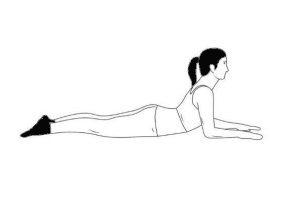
- Starting Position: Lie down on you tummy, elbows placed on the sides at shoulder level.
- Lift your head shoulders and chest by proping up on your elbows.
Return to the starting position. - Note: Pay attention to the inensity and location of pain. Cease the exercise whenever you experience symptoms getting worse, or radiating to your you legs.
Progression: If you’re pretty much comfortable, or experiencing centralization of symptoms on the lumbar spine, you can progress to full lumbar extension. Simply prope up on your hands and extend your elbows to increase the range to maximum lumbar extension.
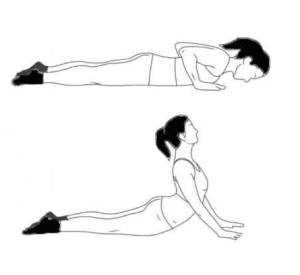
Supine Core Activation
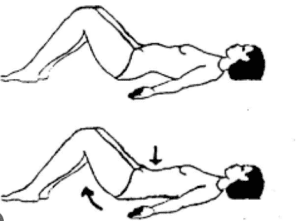
- Starting position: Lie on your back with knees flexed and hands placed under your head.
- Use your hands to support your lumbar “curve” and tense your stomach muscles. Maintain your lower back in “neutral” so don’t allow any motion to occur (ie, don’t arch your back or flatten your back”?.
- Hold the position for 3 seconds, keep breathing, don’t hold your breath.
- Repetitions: 6-8 times.
Bird Dog Exercise
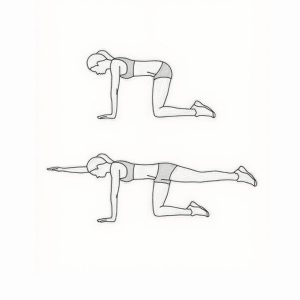
- Starting position: Get into a quadruped position, placing your hands under your shoulders and your knees under your hips.
- When lifting your arm up, keep your hips parallel to the ground, maintain a neutral spine position and engage your deep abdominal muscles.
- The head, or the cervical part of the spine, is in line with the body, with the chin directed toward the neck.
- Hold the position for 3 seconds, then relax.
- Repetitions: 6-8 times. (Both sides)
The Bridge
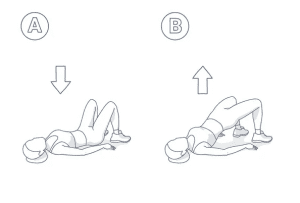
- Starting position: Lie down on your back, arms on the side, feet at shouder width apart.
- Bend your legs and get your feet flat on the floor.
- Lift your pelvis up, till it aligns with the rest of your Torso in a straight diagnonal line.
- Hold for 10 seconds.
- Return to the starting position.
- Repeat 3-4 times, 3-4 sets.
For posture advice click here;
How to Move When You Have a Disc Bulge or Herniation?
How Healthy Movements Physiotherapy Can Help
At Healthy Movements Physiotherapy, we design individualised treatment plans based on each patient’s condition and recovery phase. Our approach includes:
- Personalised exercise programs tailored to your needs
- Detailed assessment of your specific risk factors/potential causes – personalised advice about strategies to reduce risk of further injury and how to allow the pain to settle.
- One-on-one guidance to ensure correct technique and prevent strain
- Postural assessments to improve spinal alignment and muscle balance (flexors and extensors)
- Motivational support to keep you engaged in your rehabilitation journey
Ready to Start Your Recovery?
If you’re struggling with lower back pain and want to regain control of your daily activities, we’re here to help. The road to recovery requires commitment from both the patient and physiotherapist, and we’ll be with you every step of the way.
Book your appointment today and take the first step toward a pain-free life!
Frequently Asked Questions (FAQ) About Lumbar Disc Herniation
Yes! Many people recover from a herniated disc without surgery. The body can reabsorb the herniated portion of the disc over time, and inflammation usually decreases with proper care. Physiotherapy, targeted exercises, and lifestyle modifications play a crucial role in recovery. However, if symptoms persist or worsen, seeking professional guidance is essential.
No, complete rest can actually slow down recovery. While high-impact activities and heavy lifting should be avoided in the acute phase, gentle exercises that promote circulation and core activation are beneficial. Movements should be pain-free and guided by a physiotherapist to avoid further aggravation.
Signs that your condition may be worsening include:
- Increased pain, especially when sitting, bending, or lifting
- Worsening numbness or tingling in the legs or feet
- Muscle weakness in the lower body
- Loss of bladder or bowel control (this is rare but requires immediate medical attention)
If you experience any of these symptoms, consult a healthcare professional promptly.
It’s best to see a physiotherapist as soon as you are diagnosed or if you suspect you have a herniated disc. Early intervention helps manage pain, restore mobility, and prevent chronic issues. A physiotherapist will guide you through safe exercises, provide postural advice, and develop a personalised treatment plan to support your recovery.